 Skip to content
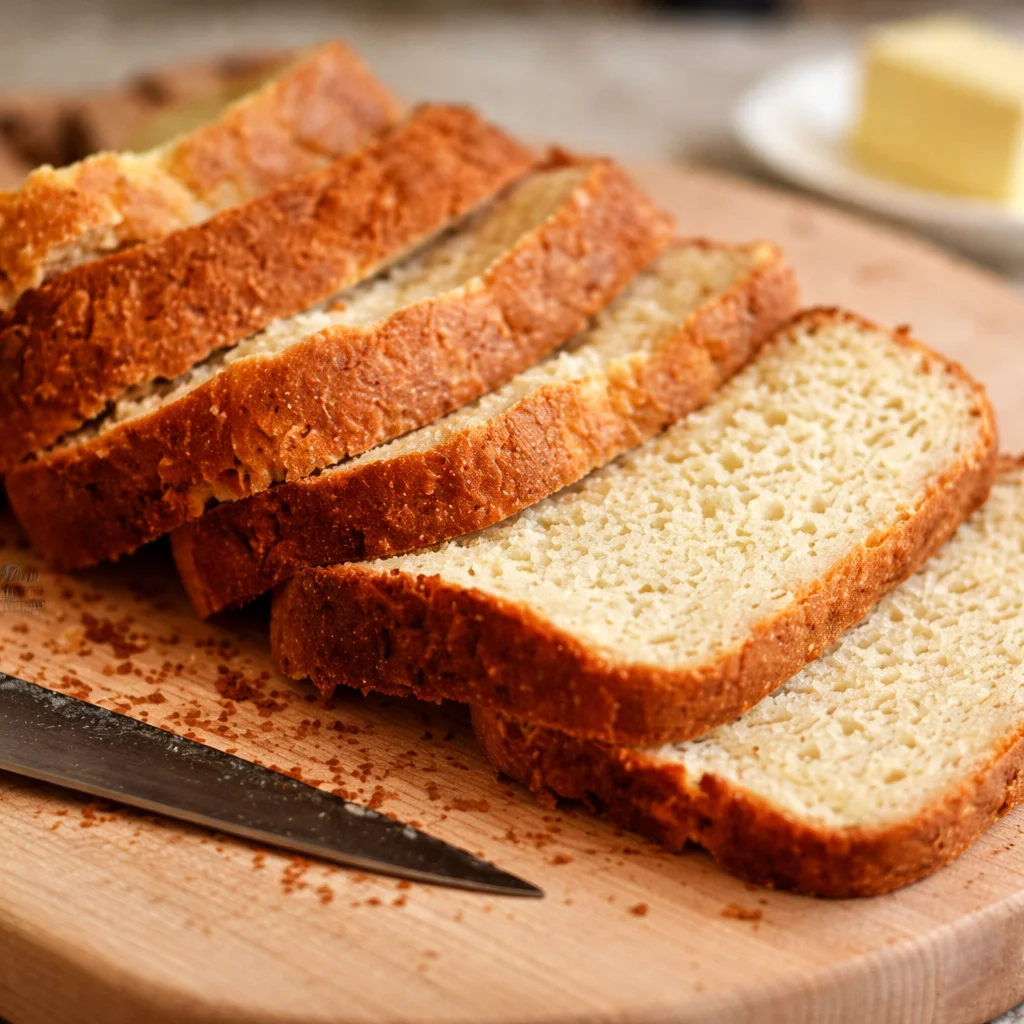
gluten free bread for bread maker recipe is the thing I reach for when I want a warm slice of bread without babysitting the oven. If you have ever bought gluten free bread at the store and thought, why is this so tiny, so pricey, and somehow still kind of dry, you are not alone. I went through a whole phase of trying different brands, then finally decided my bread maker needed to earn its counter space. This recipe is the one I make on repeat because it is simple, forgiving, and honestly comforting. You toss things in, press a button, and your kitchen smells like real bread again. 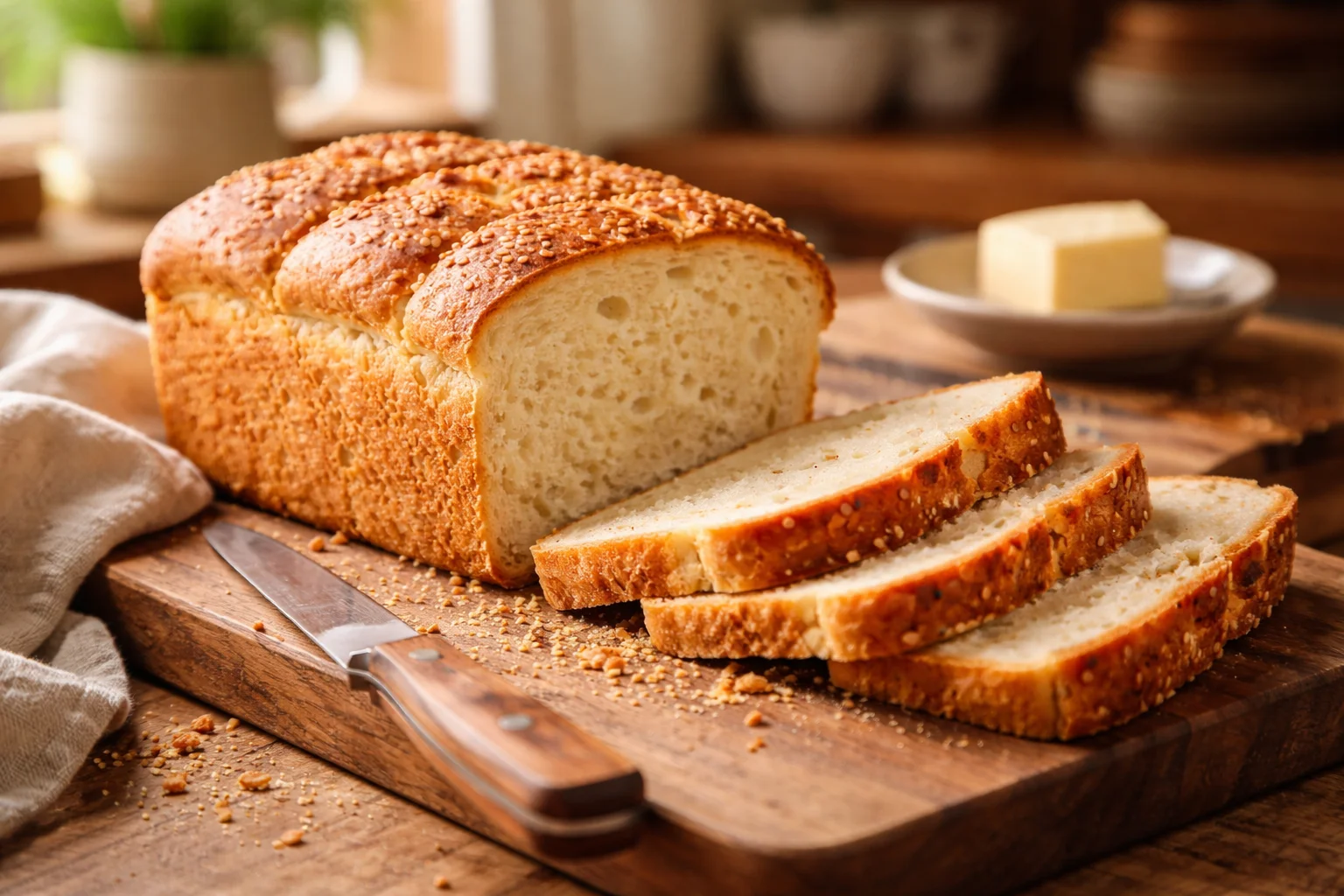
Easy Gluten-Free Bread Machine Recipe
I am going to walk you through this the same way I make it at home on a random weekday. The biggest mindset shift with gluten free bread is this: it is more like a thick batter than a stretchy dough. That is normal. Your bread maker does the mixing, the rise, and the bake, and you get a loaf that slices nicely once it cools.
Before you start, peek at your machine settings. If your bread maker has a gluten free cycle, use it. If it does not, you can still make it work with a basic or rapid cycle, but the gluten free cycle usually handles timing better.
Step-by-step directions
- Warm the liquids: Make sure your water and milk are warm, not hot. Think warm bath water. Hot liquid can mess with yeast.
- Add wet ingredients first: Pour in warm water, warm milk, oil, and eggs. This helps the paddle mix smoothly.
- Add dry ingredients next: Spoon in your gluten free flour blend, sugar, salt, and any add ins like seeds.
- Make a yeast pocket: Make a small dip in the dry flour and add yeast there so it does not touch the salt right away.
- Choose the setting: Use gluten free setting if available. Select medium crust color if your machine asks.
- Check the mix: After a few minutes, open the lid and scrape down the sides with a silicone spatula if flour is sticking.
- Cool completely: This part matters. Let it cool at least 2 hours before slicing so it sets and does not turn gummy.
I know waiting is the hardest part because it smells amazing. But cooling is what makes your slices clean and sandwich ready.
;
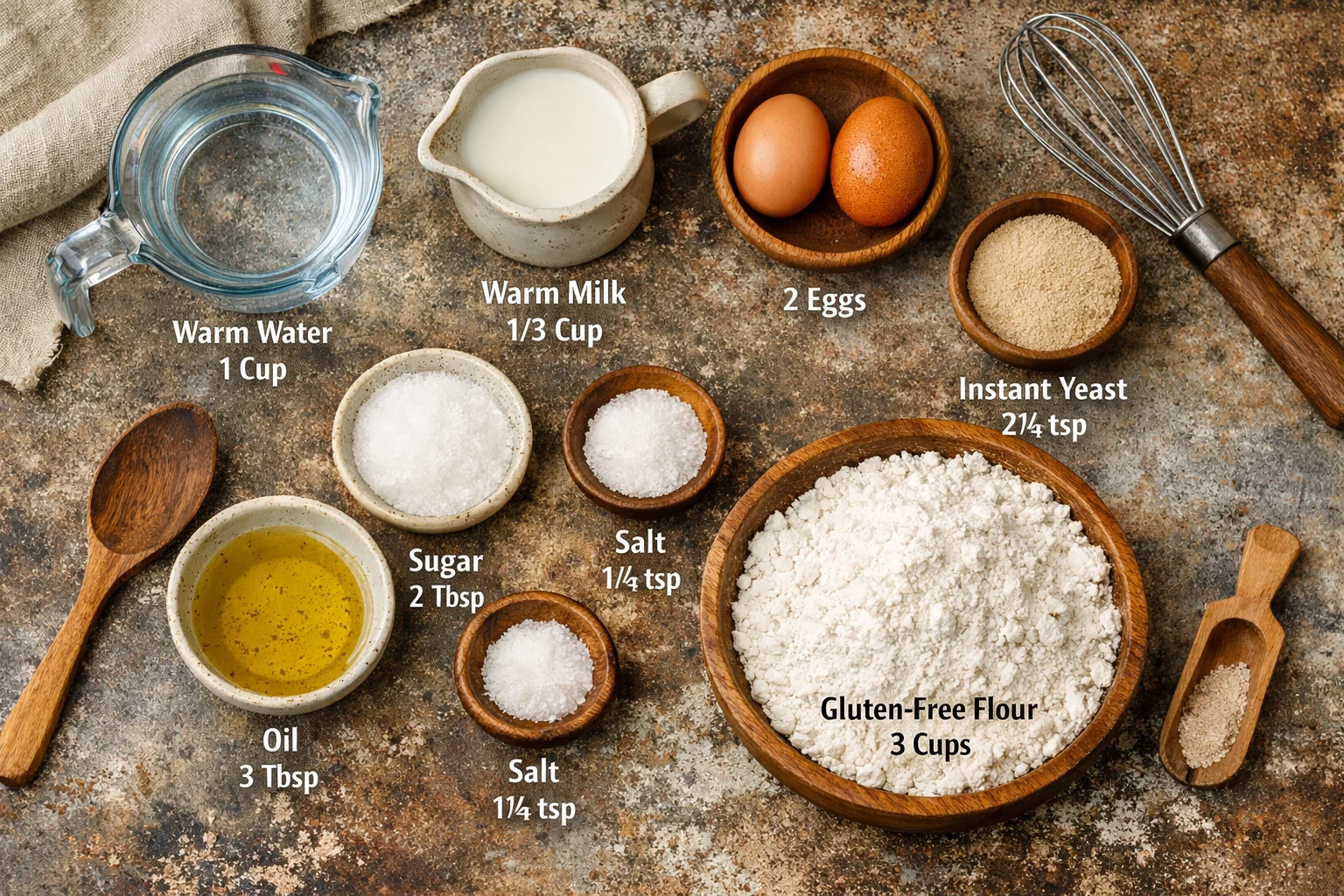
My go-to ingredient amounts (1 to 1.5 pound loaf)
Warm water: 1 cup
Warm milk or dairy free milk: 1 third cup
Eggs: 2 large
Oil: 3 tablespoons (olive oil or neutral oil)
Sugar: 2 tablespoons
Salt: 1 and 1 quarter teaspoons
Gluten free flour blend with xanthan gum: 3 cups (about 360 to 390 grams depending on blend)
Instant yeast: 2 and 1 quarter teaspoons
If your flour blend does not include xanthan gum, add 1 teaspoon. If you are sensitive to gums, see my swaps later because you have options.
“I have tried so many gluten free loaves that crumbled into sadness. This one actually sliced like normal bread and my kids ate it without complaining.”
Pro Tips for Perfect Results
This is where I save you from the little annoyances I ran into along the way. Gluten free baking is not hard, but it is specific. These tips are the difference between a loaf you tolerate and a loaf you get excited about.
Get the texture right without stress
Your batter should look like thick cake batter. If it looks like dry sand, it needs more liquid. If it looks like soup, it needs a little more flour. Humidity and flour blends vary a lot, so do not be afraid to adjust by a tablespoon at a time.
Quick checks that help
After mixing begins, the paddle should move through the batter smoothly, not struggle. Also, scrape down the sides once early on so you do not get flour streaks baked into the crust.
Don’t slice it hot, even if you want to
I have done it. The bread smells incredible, you cut in too soon, and the middle is sticky. Gluten free bread needs cooling time to firm up. If you want warm bread, slice it once cool, then toast it and add butter. You get the warm comfort without the gummy center.
Yeast and freshness tips
Make sure your yeast is not expired. If you are unsure, test it in warm water with a pinch of sugar. It should foam within 10 minutes. Also, store yeast in the fridge after opening. Tiny habit, big payoff.
Ingredients and Necessary Equipment
Let’s talk about what you actually need and why. I am not into complicated shopping lists, so I keep this one practical. The flour blend you choose matters the most, and your bread maker does the rest.
Key ingredients
Gluten free flour blend: Use a blend meant for baking, ideally one labeled 1 to 1. I prefer blends that include rice flour plus starches like tapioca or potato for better lift.
Eggs: They help the loaf hold together and stay soft. If you cannot do eggs, I share options below.
Oil: Keeps it tender and helps it stay fresh longer.
Sugar: Feeds the yeast and helps browning. It will not taste sweet.
Salt: Makes it taste like bread, not like cardboard.
Instant yeast: The easiest for bread makers because it does not require proofing first.
Equipment you will want
Bread maker, silicone spatula, measuring cups and spoons, and a cooling rack. A kitchen scale is optional but helpful for consistency, especially when you switch flour brands.
One more thing: if your bread maker pan is nonstick and has seen better days, you might notice sticking. A very light coat of oil spray can help, but do not go overboard because too much grease can affect the rise.
Variations and Substitutions for Gluten-Free Bread
This is the fun part because once you have the base recipe down, you can make it fit your life. The gluten free bread for bread maker recipe I shared is the plain everyday loaf. Here are some easy twists that still behave well in the machine.
Simple flavor variations
Seeded loaf: Add 2 to 3 tablespoons sunflower seeds plus 1 tablespoon flaxseed. It tastes hearty and toasts beautifully.
Herb loaf: Add 1 teaspoon Italian seasoning and a pinch of garlic powder. Great with soup.
Cinnamon raisin: Add 1 teaspoon cinnamon and 1 third cup raisins. If your machine has a mix in beep, add raisins then so they do not shred.
Ingredient swaps that usually work
Dairy free: Use any unsweetened plant milk. Oat milk makes it slightly softer, almond milk keeps it light.
Egg free: Use two flax eggs (2 tablespoons ground flax plus 5 tablespoons warm water) and add 1 extra tablespoon of oil. The loaf will be a little more tender and slightly less tall, but still sliceable.
No xanthan gum: If you avoid xanthan gum, try 2 teaspoons psyllium husk powder instead. It gives a nice structure, but add 2 to 3 extra tablespoons water because it thickens fast.
Small note from my own trial and error: when you change flour blends, watch the batter during mixing. Some blends absorb more water. A quick look saves the loaf.
Storage Tips for Gluten-Free Bread
Gluten free bread can go from lovely to dry faster than wheat bread, so storage is not an afterthought. The good news is that this loaf stores well if you treat it right. I make the gluten free bread for bread maker recipe, let it cool fully, then I decide what the week looks like.
How I store it
For the counter: Keep it in a sealed bag or container for up to 2 days. If your kitchen is warm, I lean toward the fridge on day 2.
For the fridge: Up to 5 days, tightly wrapped. It will firm up, so toast slices for the best texture.
For the freezer: This is the best option. Slice the loaf first, put parchment between a few slices if you want, and freeze in a freezer bag up to 2 months.
Best way to reheat
Toast straight from frozen. It brings back that fresh baked vibe and makes the edges crisp. If you are making a sandwich, I toast lightly so it stays soft but not crumbly.
Common Questions
Why did my loaf sink in the middle?
Usually it is too much liquid or the loaf rose too fast and collapsed. Next time, reduce water by 1 to 2 tablespoons and make sure your liquids are warm, not hot.
Can I use active dry yeast instead of instant?
Yes. Use the same amount, but I recommend proofing it first in a little warm water with the sugar for 10 minutes, then add it with the wet ingredients.
My bread is gummy. What happened?
Most of the time it was sliced too soon. Let it cool completely. Also make sure you measured flour correctly and did not pack it into the cup.
Do I really need a gluten free cycle?
It helps, but it is not required. A basic cycle can work if it has one rise and a steady bake. Keep an eye on the batter early on and scrape down the sides.
How do I make the crust softer?
Choose a light crust setting if your machine has it, and brush a little oil or melted butter on the top right after baking. Then cool under a clean towel for the first 30 minutes.
A Loaf You Will Actually Want to Make Again
Once you get this down, gluten free bread stops feeling like a special project and starts feeling normal again. The gluten free bread for bread maker recipe here is meant to be easy, dependable, and flexible for how you eat. Pay attention to batter texture, let it cool before slicing, and store it in a way that keeps it soft. If you try it, make a little note about the flour blend you used so you can repeat your best loaf. I hope it brings that simple joy of toast and sandwiches back into your week.

Gluten Free Bread for Bread Maker
Ingredients
Wet Ingredients
- 1 cup Warm water Make sure water is warm, not hot.
- 1/3 cup Warm milk or dairy free milk Use any unsweetened plant milk if dairy-free.
- 2 large Eggs Eggs help the loaf hold together.
- 3 tablespoons Oil Use olive oil or neutral oil.
Dry Ingredients
- 2 tablespoons Sugar Feeds the yeast.
- 1 1/4 teaspoons Salt Essential for flavor.
- 3 cups Gluten free flour blend with xanthan gum About 360 to 390 grams depending on blend.
- 2 1/4 teaspoons Instant yeast Ensure it is fresh.
Instructions
Preparation
- Warm the liquids: Ensure your water and milk are warm, not hot.
- Add wet ingredients first: Pour in warm water, warm milk, oil, and eggs to help the paddle mix smoothly.
- Add dry ingredients next: Spoon in gluten free flour blend, sugar, and salt, then any add-ins like seeds.
- Make a yeast pocket: Create a small dip in the dry flour and add yeast there to prevent it touching salt immediately.
- Choose the setting: Use the gluten free setting if available and select medium crust color.
- Check the mix: After a few minutes, open the lid and scrape down the sides if flour is sticking.
- Cool completely: Let the bread cool for at least 2 hours before slicing to prevent it from being gummy.






1 thought on “Easy Gluten Free Bread for Bread Maker Recipe You’ll Love”